Skip to content

What Are Snap Fit Joints?
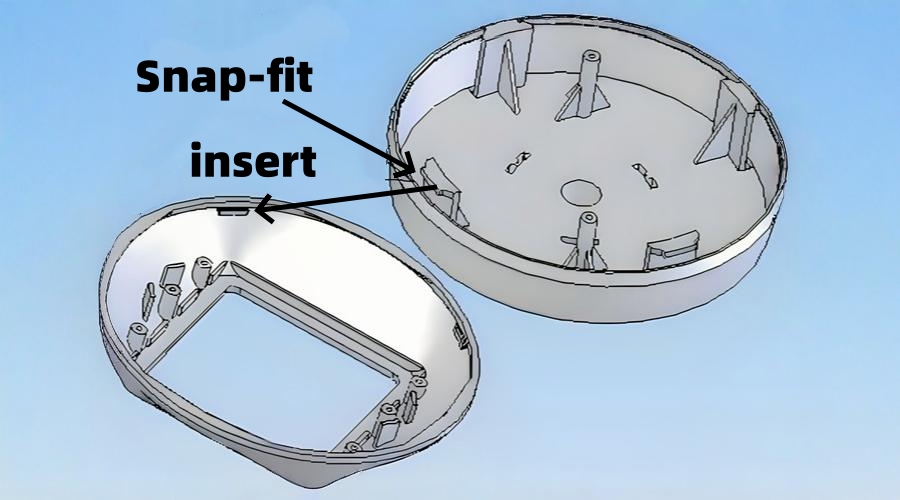
A snap fit joint is a mechanical connection that allows two parts to lock together using flexible features that temporarily deform during assembly. Rather than using screws, glue, or other fasteners, a snap fit uses a protrusion, which can often be a hook, bead, or rib that resides on one part that snaps into a matching recess on the other part. When engaged, the joint stays attached through friction and a mechanical interlock.
This joining mechanism works because the material deforms just enough to allow an assembly, then returns to its original shape and creates a durable joint. Snap fits are prevalent in the production of commonplace items such as pen caps, remote controls, battery covers, and likely countless plastic parts. Snap fits represent a critical advantage in 3D printing, and allow for parts to be easily tested, evaluated, and re-assembled without the need for or use of other hardware.
Common Types of Snap Fit Joints
Here are the most common types of snap fit joints:
Cantilever Snap Fit Joints
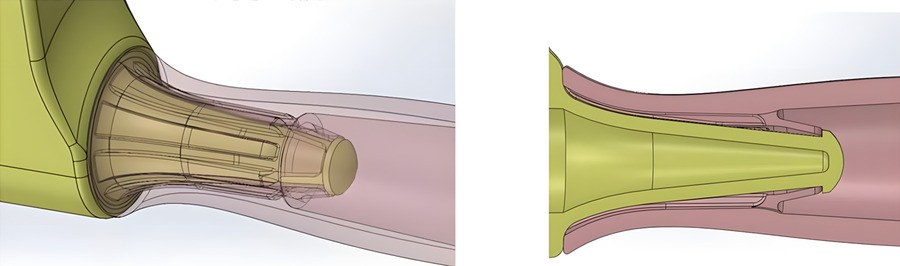
Cantilever snap fits joints are the most popular type of snap fit joint design because they are easy to use, flexible, a low manufacturing cost. The fit design consists of a flexible beam that has a hooked end, which deforms when the two connecting components are pushed together.
When the hook passes the undercut, the beam snaps back into place and produces a mechanical lock. Due to the cantilever nature of the beam, beam length, thickness, and fillet radius must be controlled in the design of a cantilever snap fit joint to avoid stress concentration.
When designed properly, a cantilever snap fit design allows for fast assembly, easy disassembly, and good performance for many assembly cycles. Cantilever snaps are commonly used in pen caps, remote controls, battery doors, small enclosures, and other small plastic parts made from injection molding or using a 3D printer.
Annular Snap Fit Joints
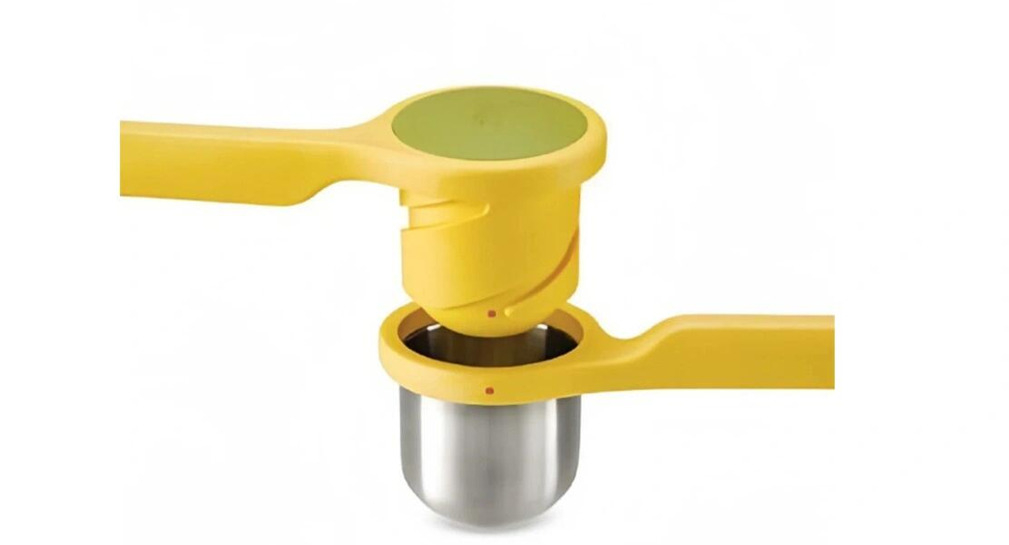
Annular snap fits utilize a circular or ring-shaped geometry, which allows the entire structure to deform at uniform rates when being assembled. Unlike a cantilever beam that would bend in only one direction, annular joints utilize radial or hoop strain, which means the material will temporarily expand or contract to lock the parts together.
The even distribution of loads provides for great structural integrity and gives annular joints advantages in designs for cylindrical components such as bottle caps, canisters, filter housings, electrical connectors, and snap-on enclosures. The uniform deformation lends itself to effective tight seals and works well with repeated loading frequencies.
The design does, however, require particular tolerances, elasticities of materials, and wall thicknesses to avoid high forces or cracking. Annular snap joints work best in injection-molded parts and some 3D printing processes, such as SLS (selective laser sintering).
Torsional or Clip-Style Snap Fits
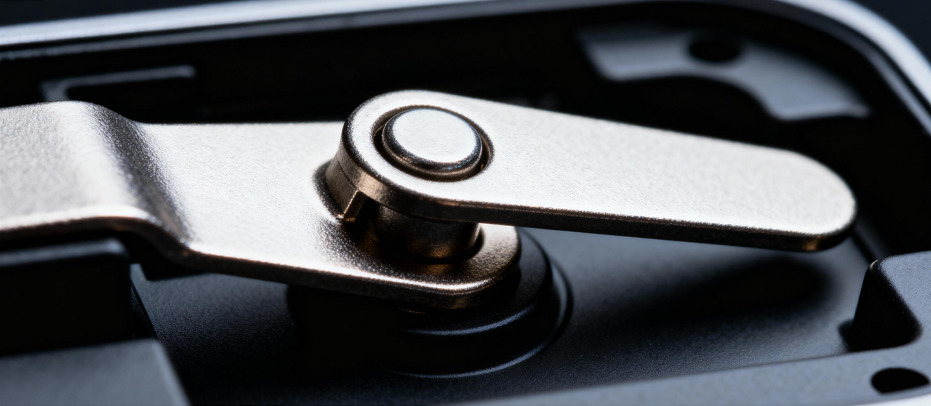
Torsional snap fits, also known as clip-type snap fits, utilize a rotational movement as opposed to pure bending or radial deformation. During the process of assembly, the clip rotates or twists to fully engage with a mating feature, effectively locking both components together.
Due to this rotational aspect, torsional snap fits are a great option when a greater area is needed to distribute force or load over a larger area, or when a component needs to be assembled and disassembled in one quick movement.
Torsional snap fits design often can tolerate repeated assembly and disassembly better than many simpler cantilever designs because Torsional snap fits minimize the strain of any one area of the clip. Torsional clips can allow creators of 3D printed and CNC-machined prototypes to confirm functional assembly requirements with a design while keeping costs low.
Advantages of Using Snap-Fit in 3D Printing
Below are the advantages of using snap fit in 3D printing:
- Quick Assembly: Snap-fit joints allow parts to attach quickly and easily without screws, adhesives, or secondary fasteners at all.
- Easy Disassembly: Snap-fit joints allow parts to be disassembled easily to access components for maintenance, repair, or even replacement.
- Cost Savings: Because snap-fit joints eliminate the need for subsequent fasteners, the amount of material used is reduced, as the joint is single-use. This results in cost savings for any product.
- Flexibility and Stress Relief: When sufficiently designed, snaps fasteners include features to create enough flexible movement of the parts to help distribute stress uniformly and prevent fatigue failure.
How to Design Snap-Fit Joints for 3D Printing
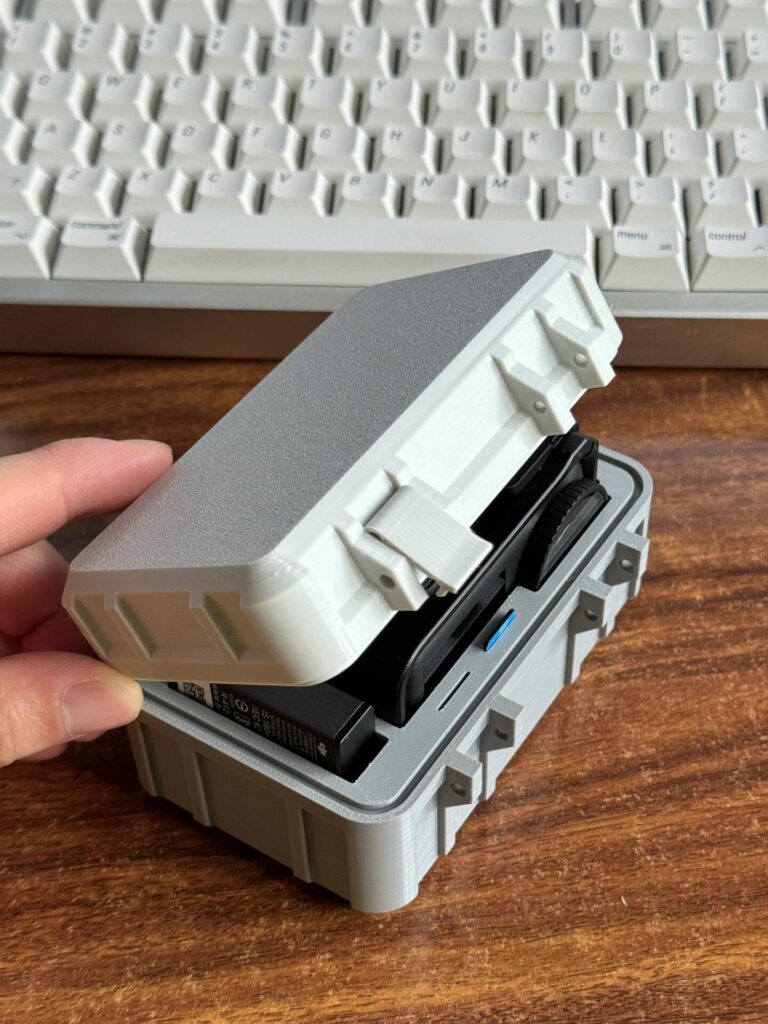

Below is a step-by-step process on how to design snap-fit joints for 3D printing:
Understand Material Features
When designing reliable snap-fit joints for 3D printed parts, it is essential to understand the mechanical properties of the selected material, its compliance, tensile strength, and fatigue performance. Having materials with adequate elasticity and durability is important to reduce fatigue failure in cantilever and annular fit joints.
Avoid Sharp Corners and Stress Concentration
Because snap-fit joints with abrupt geometry changes or sharp corners can fail due to the assembly load, creating rounded edges, fillets, or smooth transitions across cantilever beams and mating composites helps to spread the stress loads through the joint, thus improving structural integrity and increasing durability through repetitive use.
Optimize Cantilever Beam Design
When it comes to cantilever beam design, thickness, length, and angle are critical in determining the appropriate balance of flex and strength. Cantilever beams that are too thin can fail under stress, while beams that are too thick require additional assembly force, which can be difficult to engage and distract from the overall fit of the assembly. If designed appropriately, cantilever beams may function as intended when assembling the parts together.
Control Tolerances and Fit
Tolerance management is very important in 3D printing since the orientation of the build, layer resolution, or shrinkage of the material can affect portions that need to fit together. Designers should design the contact surfaces to be more generous, adding lugs or changing tolerances to account for deviations.
Add Flexible Features
Designing in flexible features, such as a slight angle of bend, taper, or a slight rounded feature, will help to relieve stress at the joint when assembled. This will help to mitigate overstress and increase longevity, especially for structures that will require assembly multiple times over, or often.
Test with Prototypes
Rapid prototyping tests are very important to understand assembly force, fitment, ease of engagement with the joint, and overall durability before committing to production. The ability to build rapid prototypes helps designers to create joints that optimize for fast engagement, convenience for end-users, and performance longevity.
Leverage Simulation Tools
These tools, such as CAD, will help the user analyze for stress concentrations, hoop strain, and cantilever beam behavior before printing. Coupled with rapid prototyping, it should ensure the snap-fit joint design is durable, reliable, and suitable for the final product.
Common Snap Fit Design Problems
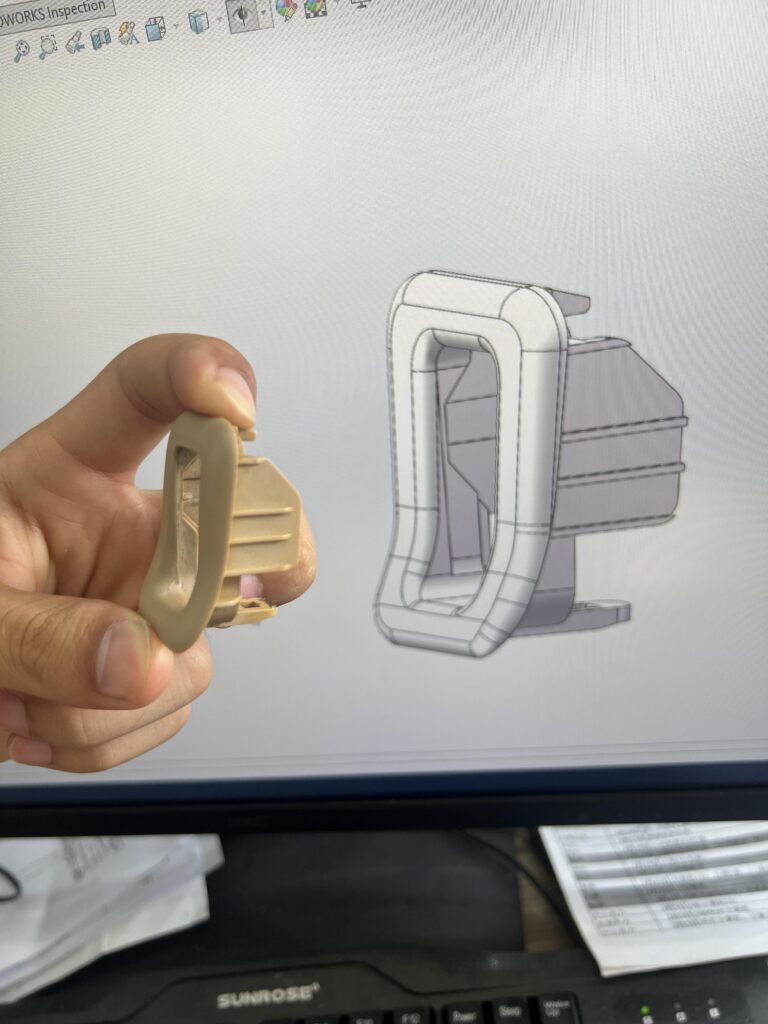
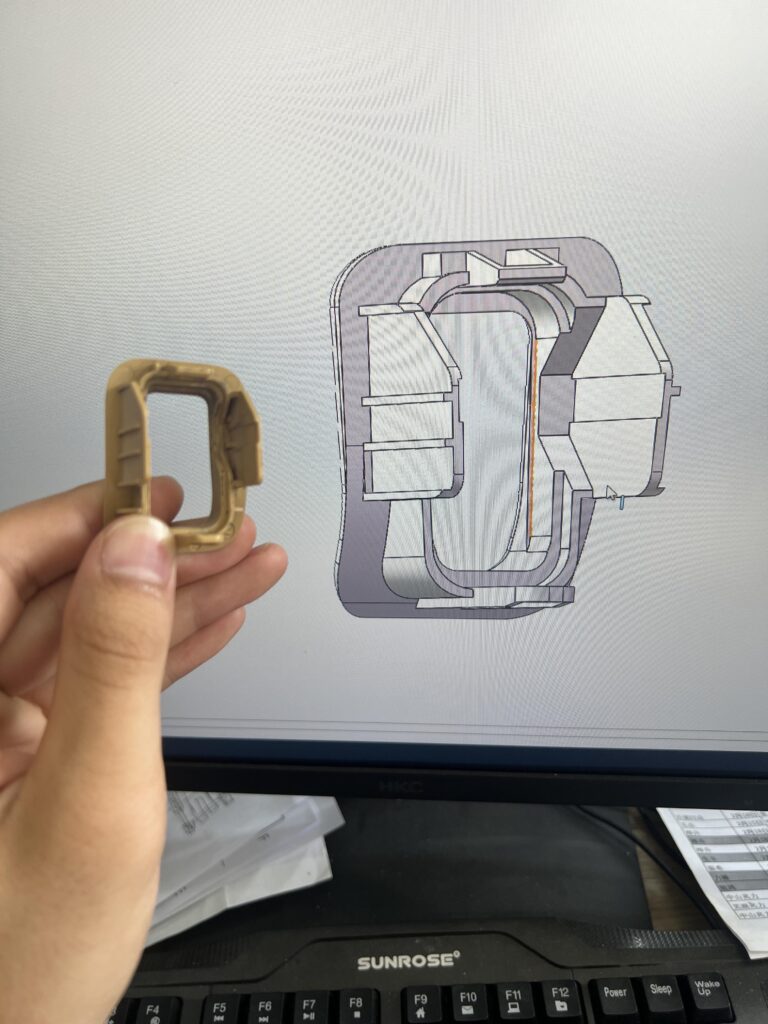
Here are some common snap fit design problems:
Fatigue Failure
Fatigue failure is a common problem with snap fit joints and occurs with cantilever snap fits subjected to repeated assembly and disassembly. Fatigue can cause incidents of cracks or breakage when subjected to repeated stress.
Excessive Assembly Force
Snap joints may also require excessive fitting engagement forces that result in damage to components and misalignment of mating components. Excessive force is typically a result of tolerances that are too tight or beam thicknesses that are too thin.
Tolerance Issues
Misaligned mating components are another common problem, especially when using 3D printing, SLS, or CNC machining. Incorrect tolerances can prevent proper joining or lead to premature failure.
Stress Concentration
Snap fit designs with sudden changes in geometry, hooks, or sharp corners create stress concentration points that may result in cracking or broken parts. Stress concentrations are especially problematic in cantilever beams and hooks.
Repeated Use Limitations
Some snap fit designs fail after multiple assembly and disassembly cycles; this is particularly relevant with high-frequency loading applications. Annular snap joints are usually more resilient with circular components, while the cantilever joints should be dimensioned carefully for repeated use.
Assembly Time and Ease of Use
Completely conceived snap fit joints often lead to increased assembly time and a reduction in ease of use. If the geometry is too complex or the fit is too snug, the assembly can require excessive force that risks damage to the parts or is simply too complicated to assemble quickly.
Material Limitations
The properties of materials designed for 3D printing or injection molding can affect the performance of snap fit joints. Failure can occur during the assembly process or during repeated assembly for snap fit joints, if the materials are brittle, have inadequate flexibility, or are the wrong thickness for proper snap fit.
Best Practices for Designing Snap Fits for 3D Printed Parts
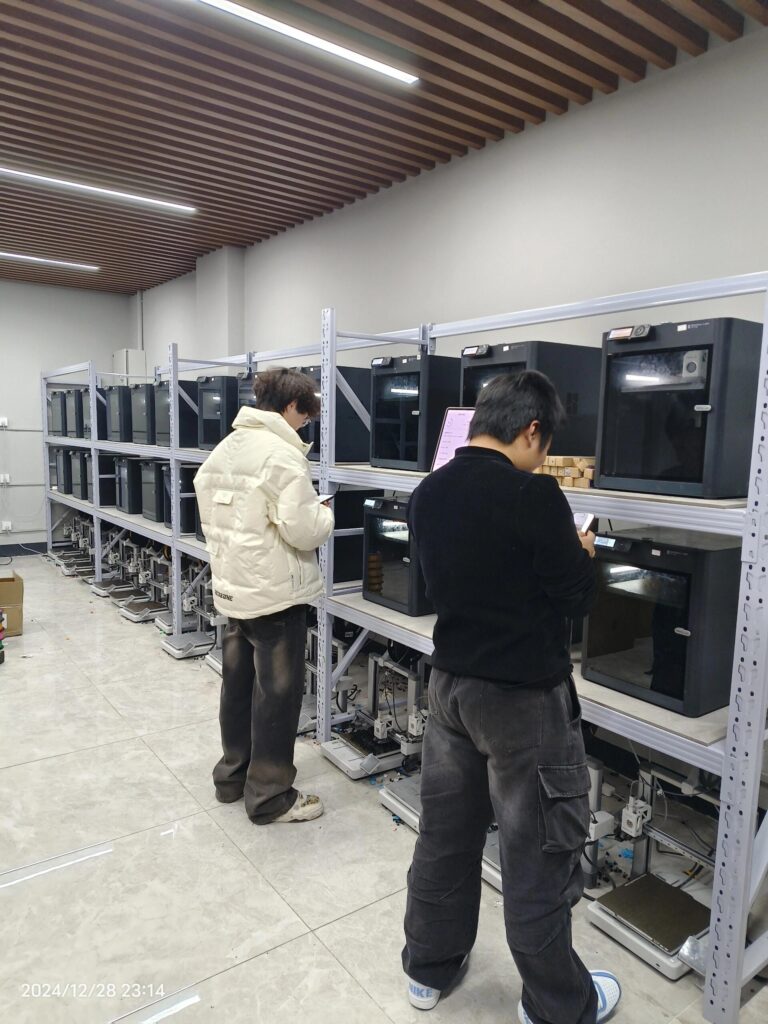
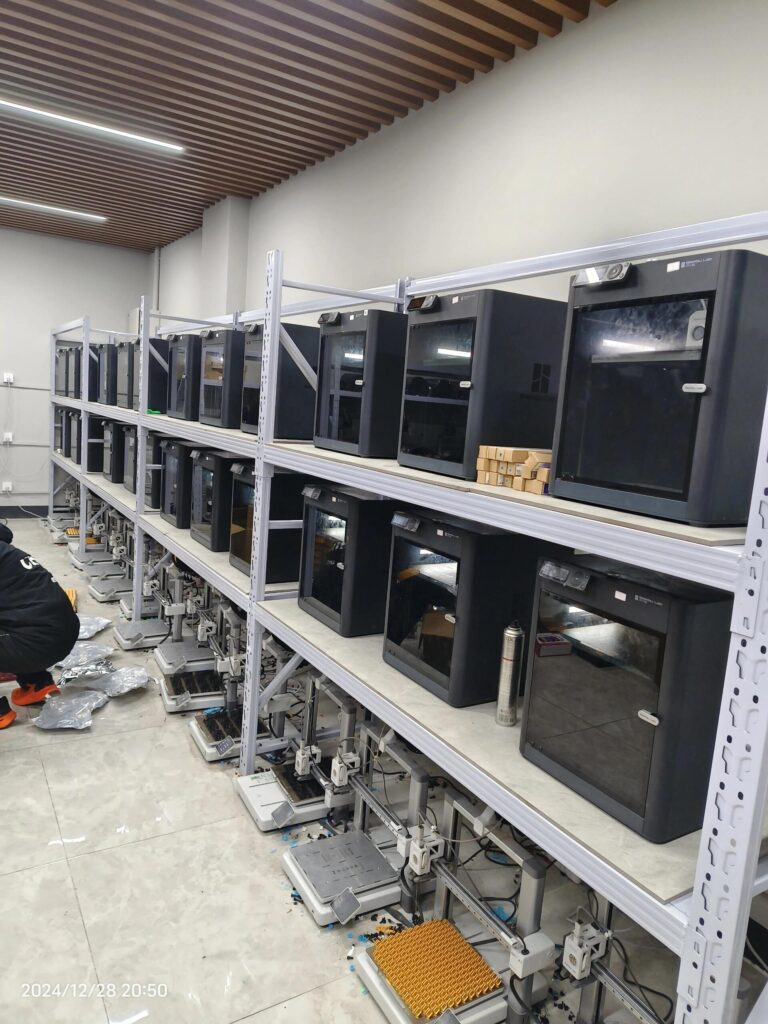
Below are the best practices to follow to get the best results when designing snap fits for 3D printed parts:
Understand Material Properties
The first step in designing effective snap joints is to understand the material properties of the plastic or resin that the part or assembly will be made of after printing. Properties such as flexibility, tensile strength, fatigue resistance, and elasticity of the plastic or resin will factor into how well cantilever and annular snap fit joints perform.
Selecting material that can withstand repeated assembly/disassembly without losing its structural integrity is critical to avoid fatigue failures due to repeated loading and use.
Avoid Sharp Corners and Stress Concentrations
Sharp corners, hooks, or sudden changes in geometry create stress concentrations, making cracks and failures more likely. Designers should provide smooth transitions, fillets, and rounded edges to cantilever beams and mating parts. This will help evenly distribute stress through the snap fit joint and lead to improved durability and performance, and reduced likelihood of failure through multiple uses.
Optimize Design of the Cantilever Beam
The cantilever beam is often the most critical component of a fit joint. The thickness, length, and angle need to be designed in an optimized way to create either a bend or flex, depending on the material and load, while making sure that the snap fit connector has the most structural strength possible.
A cantilever beam that is too thin will break under stress, while a beam that is too thick will increase assembly force and prevent the parts from mating. Cantilever beams should be dimensioned appropriately to allow for ease of assembly and a positive experience while using the parts over multiple cycles.
Consider Tolerances and Fit Design
Controlling tolerance is important in snap fit joints printed using additive manufacturing. The build direction and/or layer resolution can lead to differences in mating parts, depending on the engagement. While designing fit joints, be sure the designer accounts for each of the following: material shrinkage, differences in each print through the fabrication process, and snap fit to ensure the joint will fit correctly.
Incorporate Flexible Features
Flexibility features allow the snap fit joint to flex during engagement, absorbing any stress while mitigating excess forces. It also extends the lifespan of the snap-fit joint by reducing the potential of permanent deformation when parts are assembled repeatedly.
Testing Quick Assembly and Usability
A snap fit joint should be designed to have very quick assembly times, causing no or very little damage to parts. The most reliable way to gain this assurance is through prototyping testing, where the joint serves the coupling’s purpose.
You may prototype test through 3D printing/ rapid prototyping methods to assess the force needed for assembly, requested fit, and overall usability of the snap fit joint model prior to moving on to end product finalization.
Consider Fatigue and High-Loading Frequencies
For components that are frequently engaged or exhibit high-frequency loading, like remote controls or consumer equipment, it is essential to develop joint connections that hold up to fatigue. Considerations such as material selection, stress distribution, cantilever geometry, and rounded transitions all add to the joint’s longevity.
Utilize Simulation and Prototyping Tools
Today’s CAD and FEA tools allow designers to simulate and evaluate joint connections referencing stress concentration, hoop strain, and cantilever beam behavior before printing. Afterwards, rapid prototyping can validate the design concept materially and can safely iterate and improve the design. Prototyping the concept to modify assembly/disassembly, component, and fit design for the structural integrity of the application.
Applications of Snap Fit Joints in 3D Printed Parts
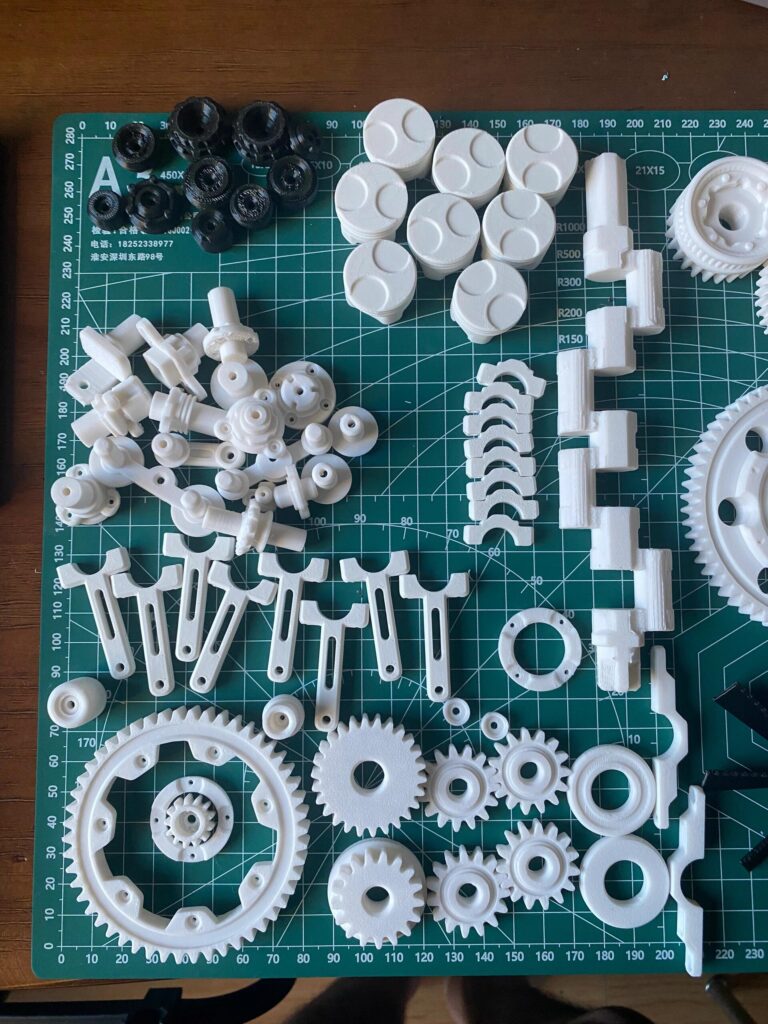
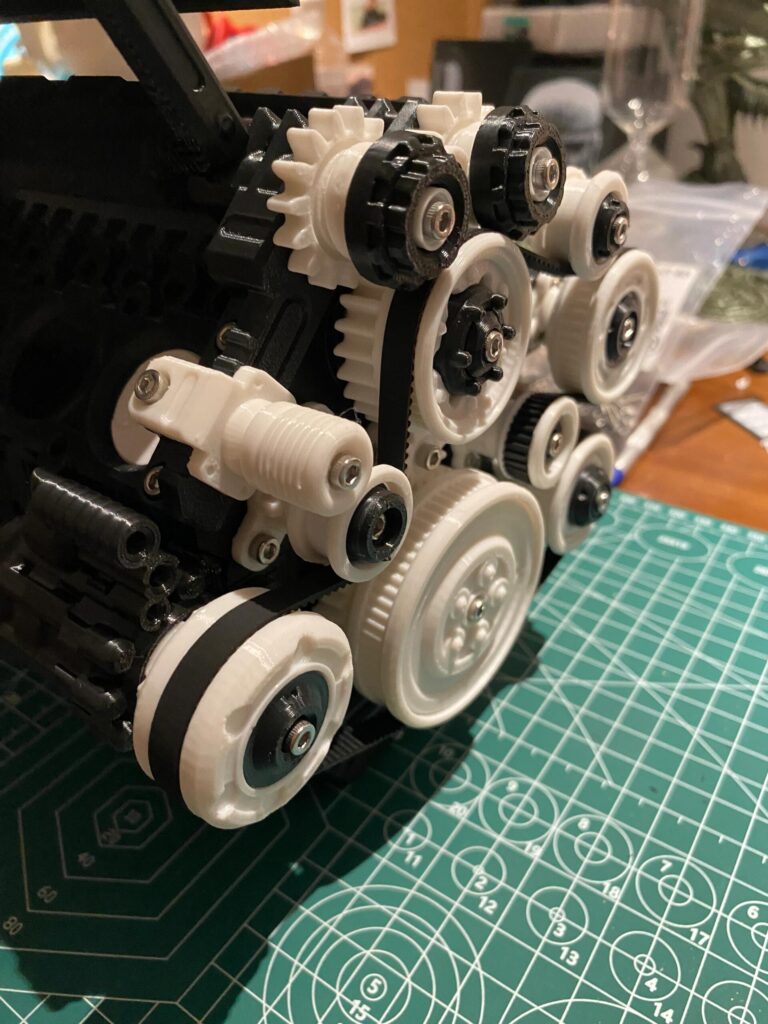
There are various applications of snap fit joints, and some of them include:
Consumer Electronics
Snap fit joints are commonly used in electronics. They provide a simple assembly at a reduced cost. Many small products that we use in daily life include parts such as a remote control, battery covers, and the caps on pens that can be attached through a snap fit connector, thus allowing for quick assembly and disassembly for maintenance or battery replacement.
Rapid Prototyping and Custom Parts
In rapid prototyping and custom parts, snap fit joints are an invaluable asset because they allow designers to test the assembly and fit of parts without the expense and limitations of traditional manufacturing. By using 3D printing, there is now considerable control over the geometry of both the male and female components, cantilever beam geometry, and the flexibility of the features to optimize the snap fit.
Medical Devices and Electronics Enclosures
Snap fit joints are also used in 3D printed medical devices, electronics enclosures, and other precision-specific applications. Their design greatly simplifies the joining process for easy assembly and operational reliability. Cantilever and annular fit joints maintain operational integrity even after repeated assembly, making them ideal for devices where there is an emphasis on structural longevity and ease of maintenance.
Conclusion

Snap-fit joints in 3D printed products provide an excellent combination of rapid assembly, cost-saving advantages, and maintainability. However, you need to take into account the characteristics of the materials being used, stress distribution during the assembly, and application. Even with the issues of fatigue failure and surplus force potential issues, applying best practices to the geometry will significantly improve the reliability of snap-fit connections.
If you want to combine your 3D printed snap-fit assemblies with custom high-precision parts, AT-Machining is a good option. They offer 3-5 axis CNC milling, turning, and Swiss CNC machining services, with access to over 50 engineering-grade materials and tight tolerances. Contact us today to get started!