Skip to content
Overview of Polyamides
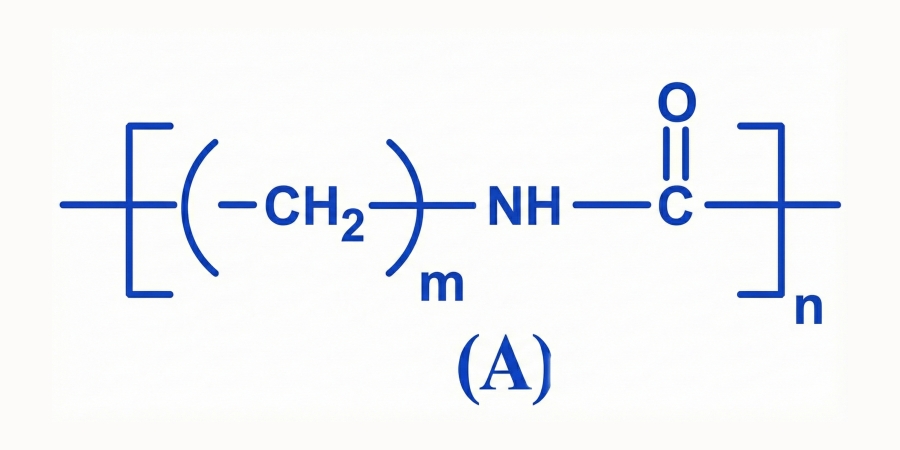
Polyamide refers to a broad family of polymers defined by repeating amide groups within their molecular structure. These long chains are held together by amide bonds, which contribute to strong tensile strength, wear resistance, and useful thermal and chemical resistance.
Polyamides can occur naturally or be produced as synthetic polymers through condensation polymerization. Natural polyamides are formed from amino acids and include fibers such as wool, silk, collagen, and keratin. In industrial applications, synthetic polyamide dominates due to its stable mechanical properties, corrosion resistance, and suitability for demanding environments.
Types of Polyamides
Polyamides are commonly grouped into three main categories based on their chemical composition and molecular structure.
- Aliphatic polyamides: These are the most widely used polyamide materials. They are valued for their balance of mechanical strength, abrasion resistance, and ease of processing, which makes them suitable for a wide range of industrial and consumer applications.
- Aromatic polyamides (aramids): Aromatic polyamides feature rigid molecular chains that provide high thermal stability and strong resistance to mechanical stress. These properties support their use in industrial fabrics, protective clothing, and high-performance structural components.
- Semi aromatic polyamides (polyphthalamides): Semi aromatic polyamides offer enhanced heat resistance and improved dimensional stability. They are commonly selected for structural parts that operate under elevated temperatures and sustained mechanical loads.
How to Identify Polyamide Materials
Identifying polyamides through visual inspection is extremely difficult. Visual identification of polyamides is almost impossible due to their lack of distinctive visual characteristics, and polyamides can be either stranded or molded, which further complicates recognition. The best way to identify a polyamide is by using a datasheet or sending a sample to a lab for destructive testing.
Calculating the density of a polyamide may help in identification, but it may not be precise enough to determine the grade. Because many polyamides share similar properties, laboratory testing is often required for accurate confirmation.
Overview of Nylons
Nylon is a widely used synthetic polyamide and a commercially successful synthetic fiber known for its excellent mechanical properties. It combines high tensile strength, abrasion resistance, and impact resistance, which explains its popularity across various industries, including textile industries, consumer goods, and industrial machinery.
Nylon materials are thermoplastic, allowing them to soften at high temperatures and be reshaped through manufacturing processes such as injection molding, extrusion, and 3D printing, including selective laser sintering. These characteristics make nylon a versatile material for both mechanical components and functional prototypes.

Types of Nylon Materials
Nylon belongs to the group of aliphatic polyamides, and its types are classified based on the number of carbon atoms between amide groups in the polymer chain.
- Nylon 6 (PA6): Nylon 6 is commonly used in gears, bearings, and mechanical components due to its good wear and tear resistance, toughness, and reliable performance under mechanical stress.
- Nylon 6/6 (PA66): Nylon 6/6 offers higher thermal resistance and a higher melting point, which supports its use in applications exposed to sustained heat, including automotive and industrial components.
- Nylon 12 (PA12): Nylon 12 absorbs moisture at a lower rate and maintains flexibility, making it suitable for tubing, electrical connectors, and precision parts that require dimensional stability.
How to Identify Nylons
Identifying nylon presents challenges similar to those of other polyamide materials. Nylon does not have any distinguishing visual properties, making it difficult to identify without specialized techniques or equipment. Testing the melting point or density can help identify nylon, but these methods do not provide enough information to determine the specific grade.
The dissolution method can also be used by placing the material in a concentrated hydrochloric acid solution and observing whether it dissolves. In practice, the identification of nylon and polyamides often requires laboratory testing, with datasheets and destructive analysis providing the most reliable results.
Similarities Between Polyamides and Nylons
| Performance Category | High-Perf Polyamides (Aromatics) | Common Nylons (PA 6 / 6,6) |
|---|---|---|
| Strength & Load | Extreme tensile strength; superior creep resistance. | High strength; more ductile/flexible under load. |
| Wear & Impact | High surface hardness; excellent for gears/bushings. | Exceptional energy absorption and impact toughness. |
| Chemicals | Excellent oil/fuel resistance; vulnerable to strong acids. | Industry standard for hydrocarbons; poor acid resistance. |
| Moisture | Low absorption (1-2%); high dimensional stability. | High absorption (up to 10%); moisture acts as a plasticizer. |
| Thermal | Very high melting point (>300°C); stable at high heat. | Moderate melting point (220-260°C); heat sensitive when wet. |
Despite some contrasting characteristics, these materials have some similarities. Here are the most common ones:
Strength and Load-Bearing Performance
Polyamides and nylon are valued for their ability to withstand mechanical stress without permanent deformation. Their molecular structure, built from long chains linked by amide bonds, supports high tensile strength and consistent performance under repeated loading.
Nylon is one of the strongest engineering plastics available, which explains its frequent use in mechanical components and structural applications. These shared properties allow both materials to perform reliably in environments where durability is a primary requirement.
Wear Behavior and Impact Resistance
Resistance to surface damage is another area where polyamide and nylon closely align. Both materials demonstrate strong wear resistance and impact resistance, which makes them suitable for parts exposed to continuous friction or repeated contact.
Components such as gears, bearings, and transport systems benefit from this combination of toughness and abrasion resistance. Their ability to maintain shape and function under mechanical stress supports long service life in industrial machinery.
Chemical Resistance
Polyamide materials are widely recognized for their chemical stability in harsh operating environments. Polyamides exhibit excellent chemical resistance, although the degree varies by type and exposure duration.
Nylon shares this trait, allowing it to resist many oils, fuels, and solvents commonly encountered in industrial settings. This similarity supports their use in applications where contact with aggressive substances is expected.

With 30 years of CNC experience, Sam is dedicated to solving complex design and machining challenges, ensuring precision and efficiency for every customer project.
[email protected]Best Practice for Design Polyamide & Nylon Parts
Consider nylon’s high creep under load when designing load-bearing parts; add a safety factor, avoid tight tolerances, because nylon can creep over 1% strain at moderate stresses.
Contact Our CNC Machining ExpertInteraction with Moisture
Both polyamides and nylon offer a degree of water resistance, though their response to moisture absorption can differ by formulation. Moisture uptake can influence dimensional stability, which is an important consideration in design.
In some applications, controlled absorption of moisture can be useful, while in others it requires compensation during material selection. Despite these variations, both materials remain suitable for environments where occasional exposure to water is unavoidable.
Thermal Behavior and Melting Characteristics
Polyamides and nylons exhibit a range of melting points and thermal properties that depend on chemical composition, molecular weight, and crystallinity. Differences in chain length and molecular structure influence how each material responds to high temperatures.
While some nylon materials melt at lower temperatures than certain polyamides, the overall thermal resistance of both groups supports their use in applications exposed to elevated heat. These shared thermal characteristics contribute to their widespread adoption across various industries.
Key Differences Between Polyamides and Nylons


Knowing the differences between polyamides and nylons will help you choose the right material for your project. Here are the main ones:
Scope and Chemical Structure
Polyamide refers to a broad class of polymers characterized by repeating units connected through amide bonds. These amide groups form long chains that can vary widely in chemical composition, molecular structure, and performance.
As a result, polyamide materials include everything from natural fibers to high-performance engineering plastics. The chemical structure of nylon is highly polar and symmetrical, while polyamides can vary in structure depending on whether they are aliphatic, semi-aromatic, or aromatic polyamides.
Nylon sits within this larger family as a specific group of synthetic polyamides produced through condensation polymerization. Standard nylon types include PA6 and PA66, which are formed from carefully selected diamines and dicarboxylic acids.
While nylon is the most common polyamide and is widely used across several sectors, polyamide, as a broader term, also includes specialty materials such as bio-based PA11 and other polyamides designed for targeted performance requirements.
Mechanical Strength and Impact Performance
The mechanical range of polyamides is wide due to differences in molecular structure and chemical composition. Aromatic polyamides like Kevlar have a tensile strength of approximately 3,600 MPa, vastly outperforming standard nylon types and supporting their use in extreme load-bearing applications. This illustrates how the term polyamide covers materials with very different strength profiles.
Nylon, by comparison, offers a more consistent and practical strength range for everyday engineering use. Nylon has higher tensile strength and impact resistance and is self-lubricating, making it suitable for moving mechanical parts.
It is also known for its high strength-to-weight ratio, which allows manufacturers to replace heavier metal components in mechanical systems. Nylon has a better balance of properties compared to aromatic and semi-aromatic polyamides, which often prioritize heat resistance or stiffness over toughness.

Tracy is a sales manager with 18 years of experience in CNC machining, specializing in precision components and client solutions.
[email protected]Best Practice for Machining Polyamide & Nylon
Preheat Nylon/Polyamide stock to 50–60 °C before machining to reduce moisture-induced dimensional instability; uncontrolled moisture can warp parts by 0.2–0.5 mm in precision features.
Contact Our CNC Machining ExpertMoisture Absorption and Dimensional Stability
Polyamides generally have poor resistance to moisture absorption, while nylon demonstrates higher water absorption compared to other polyamides. This behavior can influence dimensional stability and long-term performance in humid environments.
Specialized polyamides address this limitation through chemical design. PA11 and PA12 can absorb significantly less water than standard nylon, improving dimensional stability in precision components.
Specialized polyamides like PA12 can absorb around 1.5% moisture at saturation, while Nylon 6 can absorb up to 9.5%. These differences make low-moisture polyamides more suitable for applications where tight tolerances must be maintained.
Manufacturing and Cost Considerations
Polyamide materials can originate from both natural and synthetic sources, which contributes to their broad classification and wide performance range. Manufacturing processes vary depending on the type of polyamide and its intended application, with some requiring complex processing conditions and higher production costs.
Nylon is entirely synthetic and was originally developed as a durable and affordable alternative to silk. Nylon is often easier to process and lower in cost compared to other polyamides, particularly when using standard grades.
Cost effectiveness and ease of processing make nylon 6 and 6,6 significantly more affordable for mass production than high-performance alternatives. This combination of manufacturability, availability, and balanced performance explains why nylon remains a popular material across consumer goods, industrial machinery, and structural applications.
Common Applications of Polyamides and Nylons
Common Applications of Polyamides
Polyamides are used across industries that require strength, thermal stability, and reliable performance under mechanical stress.
- Automotive and transportation components: Polyamides are widely used in the automotive industry for components that require high strength and durability, such as intake manifolds, engine covers, airbag housings, and interior structural parts. Their favorable strength-to-weight ratio also supports weight reduction in vehicle design.
- Aerospace applications: Polyamides are used in the aerospace industry for parts that require high strength-to-weight ratios, where mechanical reliability and thermal resistance are essential.
- Protective clothing and industrial fabrics: Heat-resistant polyamide fabrics are used in workwear and fire-resistant clothing, particularly in environments exposed to high temperatures and mechanical wear.
- Cable protection and transport infrastructure: Polyamide-based cable protection systems are commonly used in railways and transport systems due to their durability, flexibility, and resistance to mechanical damage.
- Medical and food-related applications: Polyamides are utilized in the production of medical devices due to their biocompatibility and strength. Selected grades are also used in food packaging films, conveyor belts, and seals, where chemical stability and wear resistance are required.
Common Applications of Nylon
Manufacturers choose Nylon for machining applications, and it is widely used across several sectors due to its balanced mechanical properties, ease of processing, and cost-effectiveness.
- Textiles and apparel: Nylon is commonly used in textiles for its durability and elasticity, making it suitable for clothing and outdoor gear. Nylon’s superior elasticity and moisture-wicking properties make it the primary choice for activewear, swimwear, and hosiery.
- Mechanical and engineering components: Nylon is utilized in the production of gears and bearings due to its mechanical strength. Its high strength-to-weight ratio and self-lubricating behavior make it suitable for moving mechanical parts.
- Automotive applications: Nylon is frequently used in the automotive industry for components like radiator fans and fuel lines due to its strength and heat resistance. Glass-filled Nylon 6 is increasingly used in the automotive industry to replace metal parts for weight reduction.
- Consumer goods: Nylon is often used in consumer goods such as toothbrushes and kitchen utensils due to its wear resistance, toughness, and long service life.
- Electrical and fastening components: Nylon is used in the manufacturing of electrical connectors and cable ties because it is a good insulator and maintains dimensional stability under mechanical load.
Conclusion

Polyamide vs nylon is best understood by recognizing that both materials share a common foundation while offering distinct performance advantages. Their amide bonds provide strength, wear resistance, and thermal stability.
However, differences in moisture absorption, mechanical properties, and processability influence how each material performs in real-world applications. A clear understanding of these differences helps engineers and designers select the right material for structural components, consumer products, and industrial parts. Polyamide and nylon remain popular across various industries due to their versatility and dependable performance under mechanical stress and high temperatures. If you are considering polyamide or nylon for your manufacturing needs, AT-Machining provides reliable manufacturing support and material expertise. Reach out to us to discuss your project or request a quote today.