Skip to content
What Is Rapid Prototyping?
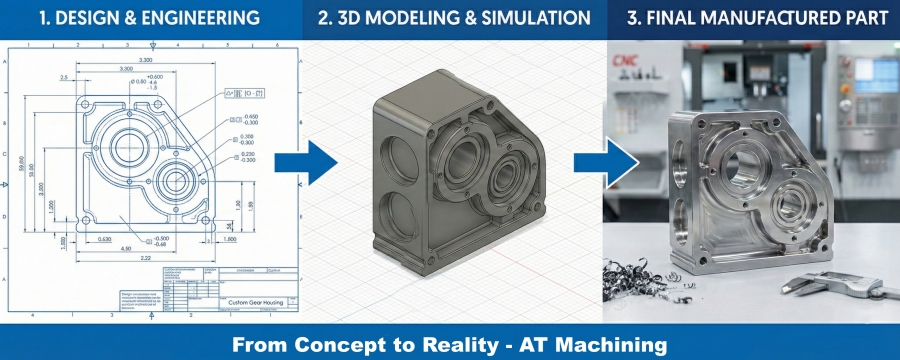
Rapid prototyping brings together several manufacturing methods, including 3D printing, CNC machining, rapid injection molding, and casting techniques, to produce parts, models, and assemblies in a short time frame. Among these options, 3D printing is commonly used during early development because it allows teams to move from digital concepts to physical parts quickly while keeping material and tooling costs low.
Fast turnaround enables teams to involve users early in the evaluation process to test ideas and collect practical feedback while changes are still easy to implement. When prototypes are reviewed by real users, specific insights emerge around usability, comfort, and functional gaps that may not be obvious in digital models alone. These insights help teams refine designs with purpose rather than making unfocused adjustments.
Effective rapid prototyping also relies on disciplined iteration. Setting clear limits on revision cycles and defining a point where design changes stop ensures development stays on schedule and avoids unnecessary delays. Focusing on core features instead of surface-level refinement ensures that each prototype addresses what matters most. This structured, user-driven approach leads to finished products that are better aligned with real needs and ready for confident production decisions.
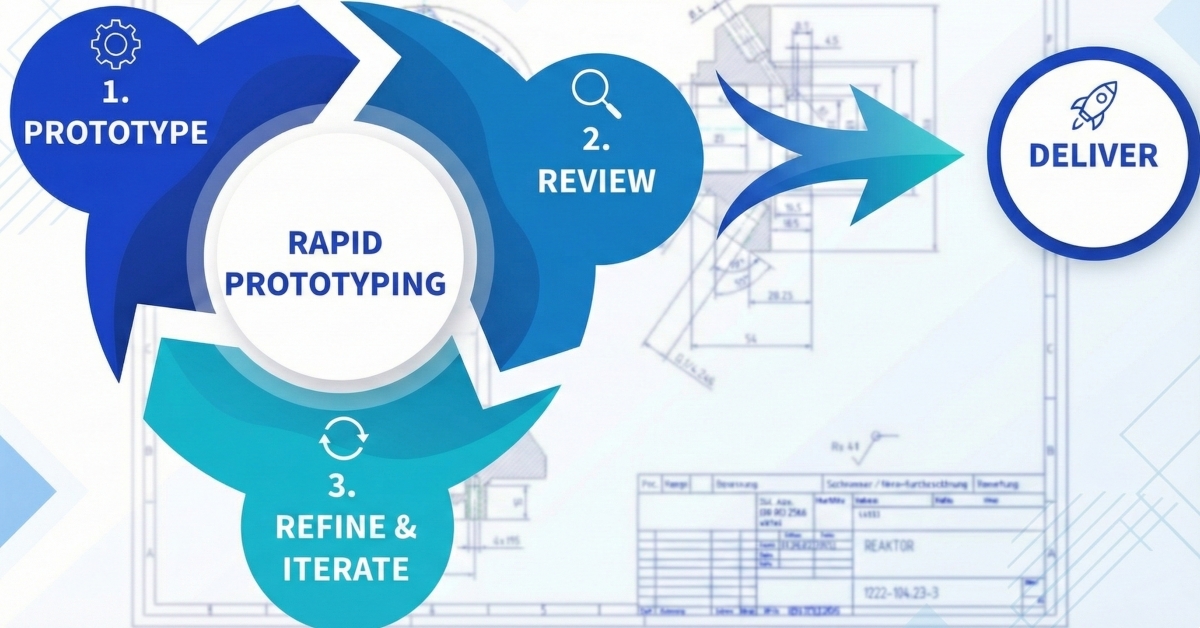
You can view rapid prototyping in these three easy steps in the product development cycle:
1) Prototyping
The rapid prototyping process begins with a proper grounding of the product idea in real market insight. This involves understanding the target users, the problem they face, and the solutions they currently rely on, whether digital or manual.
These insights are then discussed in a focused design process to define a clear and realistic version-one product. From there, a low-fidelity prototype is created to outline the core functionality of the product, keeping the scope intentionally small and focused on the essential value of the product.
2) Reviewing
Once the prototype is ready, it is shared with a focused group of real users and key stakeholders for evaluation and usability testing. Users are guided through the prototype to gather feedback on whether it addresses their problem, what feels unnecessary, what is missing, and whether they would realistically adopt such a solution.
3) Refining and Iterating
After user feedback has been collected, it is analyzed to uncover recurring patterns and key insights. The prototype is refined through targeted improvements and essential feature adjustments. Rapid prototyping, testing, and refining continue until the prototype has met the adequate standards for usability and functionality before moving on to create the final product.
Advantages of Rapid Prototyping
The major advantage of rapid prototyping in the product development process is speed. It removes the unnecessarily long wait and helps engineers create a more efficient path towards creating finished products.

With 30 years of CNC experience, Sam is dedicated to solving complex design and machining challenges, ensuring precision and efficiency for every customer project.
[email protected]Best Practice for Rapid Prototyping
Validate wall thickness and feature size against chosen rapid prototyping process limits; undersized walls often fail, with SLA parts needing a minimum of 0.8–1.0 mm for strength and printability.
Contact Our CNC Machining ExpertHere are the main benefits:
Quicker Product Development Process
Using 3D printing or CNC machining for rapid prototyping ensures a shorter and more efficient timeline for product development. Producing physical prototypes quickly allows you to test and create multiple iterations on designs faster. This, in turn, speeds up the product’s time to market.
Relatively Cost-effective
Unlike traditional manufacturing methods, rapid prototyping offers you more cost-effective options. 3D printing allows you to use cheaper plastics and materials. Moreover, this rapid prototyping technology requires less labor, no expensive molds or toolings, and little or no post-processing. This way, it helps you keep costs much lower.
High Fidelity Prototypes for Functional Testing
High-fidelity prototypes play a critical role in validating designs before full production. Engineers use these prototypes to assess form, fit, and performance under realistic conditions, which is especially important in regulated sectors.
In industries such as aerospace and medical devices, rapid prototyping is often used to support the shift from additive manufacturing during development to injection molding when production volumes increase. This progression allows teams to confirm that parts can meet strict performance and manufacturing requirements before scaling.
Minimizes Wastage and Design Flaws
Building product layer by layer reduces the material wastage that comes with traditional methods. Furthermore, engineers use rapid prototyping to test models thoroughly and find flaws for early design optimization. This helps you avoid costly revisions and changes upon production.
Explores Intricate Designs and Complex Geometries
With various available technologies, it also enables you to try out intricate designs and complex geometries that would naturally be difficult for traditional methods. With interactive prototypes, you open up so many possibilities for creativity and innovation.
Ensures Effective Collaboration and Communication
With physical models, product designers can share concepts with clients, collaborators, and colleagues. It enables you to convey your ideas beyond just design visualization on screens. It facilitates clear user feedback to improve the understanding of user needs for refinement and improvement.
Rapid Prototyping Methods and Tools
With the several technologies available, rapid prototyping helps engineers and product designers to create various kinds of prototypes from concept models through production. Here are some of the rapid prototyping tools used:
3D Printing
As mentioned earlier, 3D printing remains the most common technology used in rapid prototyping, and the reason is not far-fetched. This additive manufacturing technology is fast and versatile when it comes to fabricating interactive prototypes. It allows you to print and test various designs within hours or a few days.
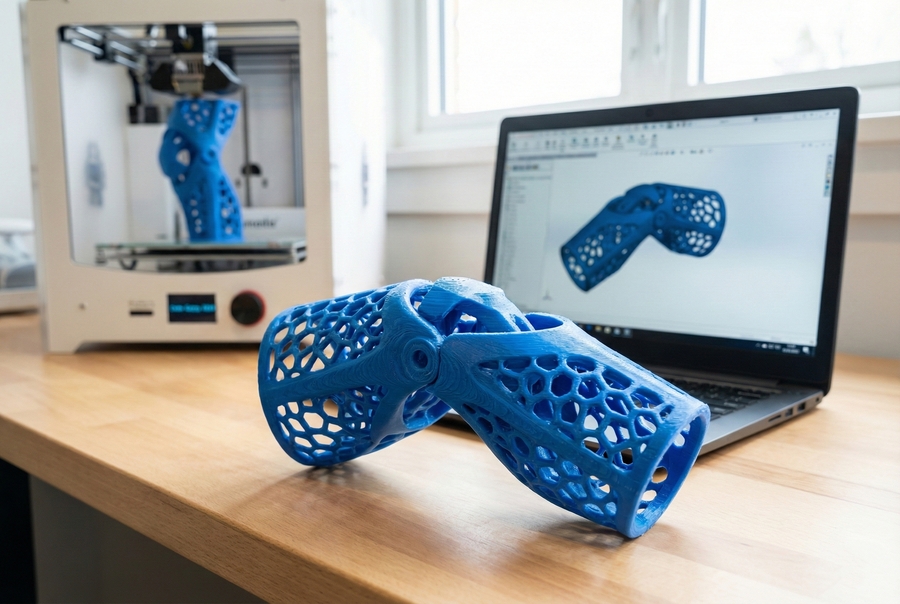
Furthermore, 3D printing can use cheaper materials for testing concept models before moving to high-grade materials or engineering-grade thermoplastics. So, you can perfect designs and prove your concepts before moving into full-scale production.
Manufacturers use different 3D printing methods for rapid prototyping needs. However, the three most common additive processes are fused deposition modeling (FDM), selective laser sintering (SLS), and stereolithography (SLA). Let’s check out what each process entails.
Fused Deposition Modeling (FDM)
Engineers prefer to use the FDM technology for rapid prototyping. Engineers use this iterative process to produce low-fidelity prototypes by heating thermoplastic filament and depositing it layer by layer until the shape is complete. Its popularity comes from its affordability and its compatibility with materials such as ABS, PLA, and several engineering-grade plastics suited for functional testing.
FDM also presents design considerations that should be addressed early. Achieving fine details and smooth surface finishes can be challenging, and printed parts often require secondary finishing to improve appearance. Complex geometries typically rely on support structures, which can influence accuracy and post-processing time.
Selective Laser Sintering (SLS)
This technology builds parts by using a laser to fuse plastic or metal powder into solid forms. Because the surrounding powder supports each layer during printing, manufacturers can produce parts without dedicated support structures. This makes SLS a strong choice for complex geometries, including internal channels and undercuts.
Rapid prototyping parts made with this additive manufacturing technique are known for their strength and functional performance. They often resemble injection-molded components and are suitable for fit checks and limited production runs. Multiple parts can also be produced in a single build, which helps speed up design evaluation.
Surface finish is one of the main trade-offs with SLS. Parts typically have a rough or slightly porous texture, and some distortion may occur during cooling. Manufacturers often use finishing steps such as bead blasting, media tumbling, chemical smoothing for plastics, or heat treatment for metals to improve final quality.
Stereolithography (SLA)
This iterative process is valued for its high level of accuracy and surface quality in rapid prototyping. This process uses a UV light source to cure liquid resin in precise layers, producing parts with smooth surfaces and sharp details that closely resemble finished components. Manufacturers usually rely on SLA when visual quality and dimensional precision are critical to evaluating a design.
A wide range of resin options allows SLA to support different optical, mechanical, and thermal requirements. These materials make it possible to simulate the look and behavior of end-use parts during early testing. Depending on the system used, including DLP or MSLA, production speed can be efficient for smaller components.
SLA also introduces additional steps that affect the overall workflow. Printed parts must be washed, fully cured, and cleared of supports before they are ready for evaluation. Build volumes tend to be smaller than those of other rapid prototyping methods, which can limit efficiency when producing large parts or multiple components in a single run.
CNC Machining
This is another popular technology that uses computer-controlled tools to shape parts by removing material from a solid block. Engineers rely on cutting, milling, turning, and drilling operations to achieve the final geometry, guided by CAM and CAD models that define precise tool paths. This subtractive approach differs from layer-based manufacturing and allows for tight tolerances and consistent results in rapid prototyping.
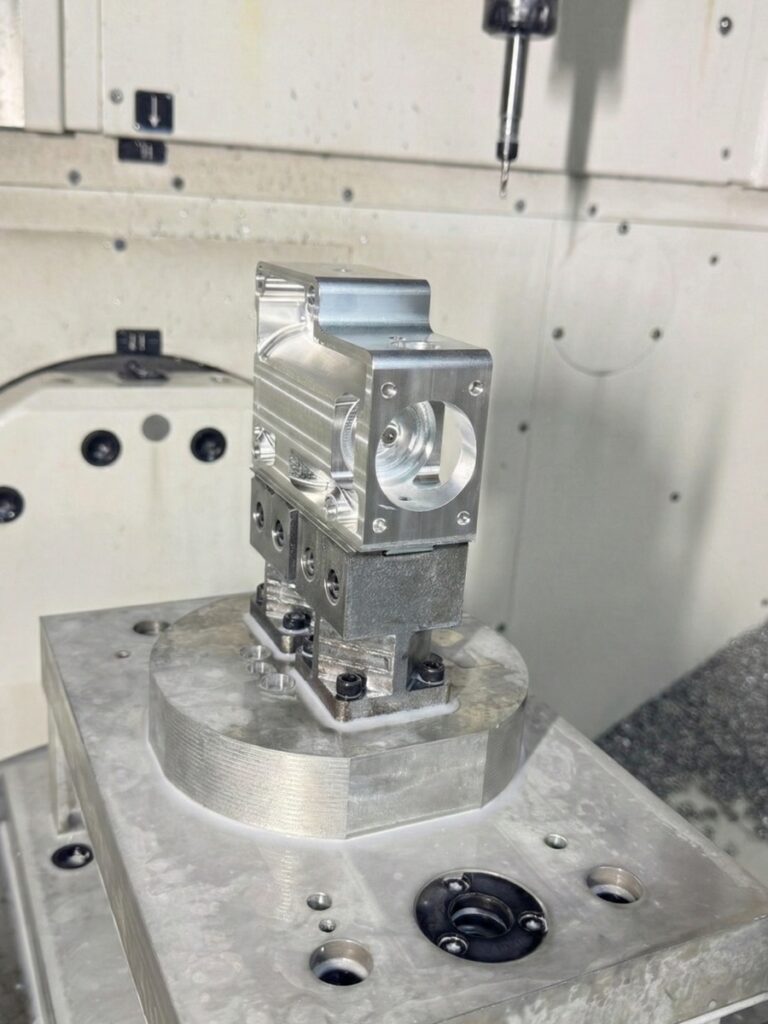
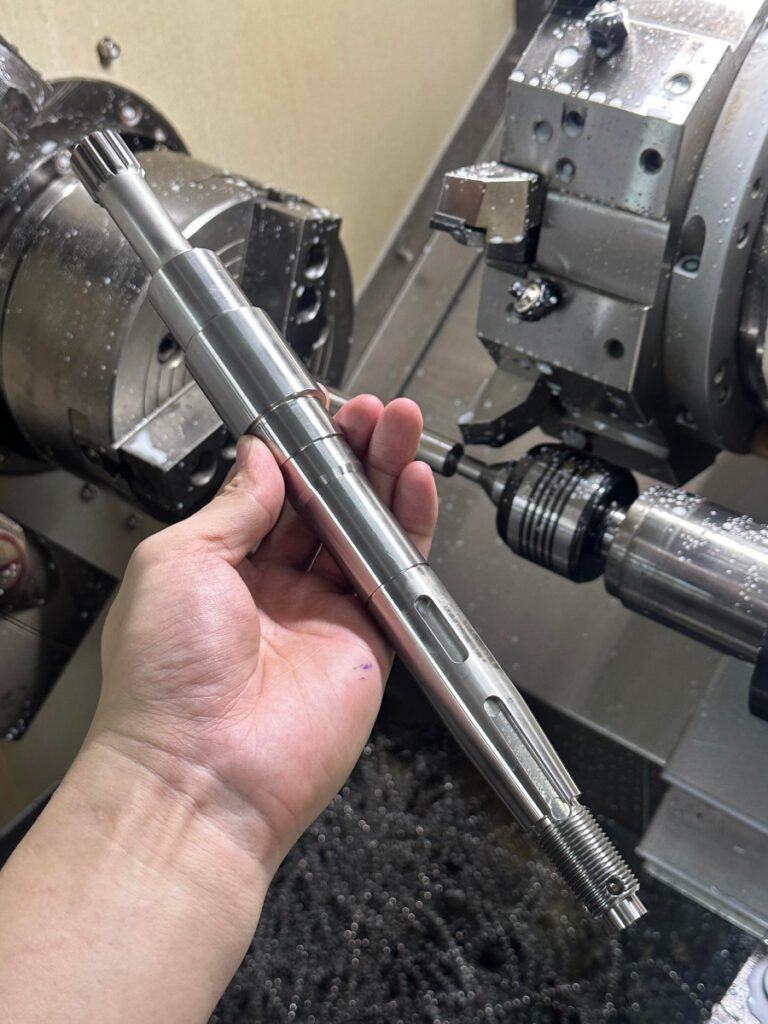
One of the main strengths of CNC machining is its material flexibility. Manufacturers use it to produce parts from plastics and metals such as aluminum, steel, copper, brass, titanium, etc. It also supports materials like wood, foam, and fiberglass, which makes it suitable for a wide range of prototype and production needs.
Cost and design limitations should be considered early. This manufacturing process is often more expensive than 3D printing, especially for complex parts or small batches. Part size is restricted by the dimensions of the starting material, and intricate internal features are generally easier to achieve with additive manufacturing methods.
Rapid Injection Molding

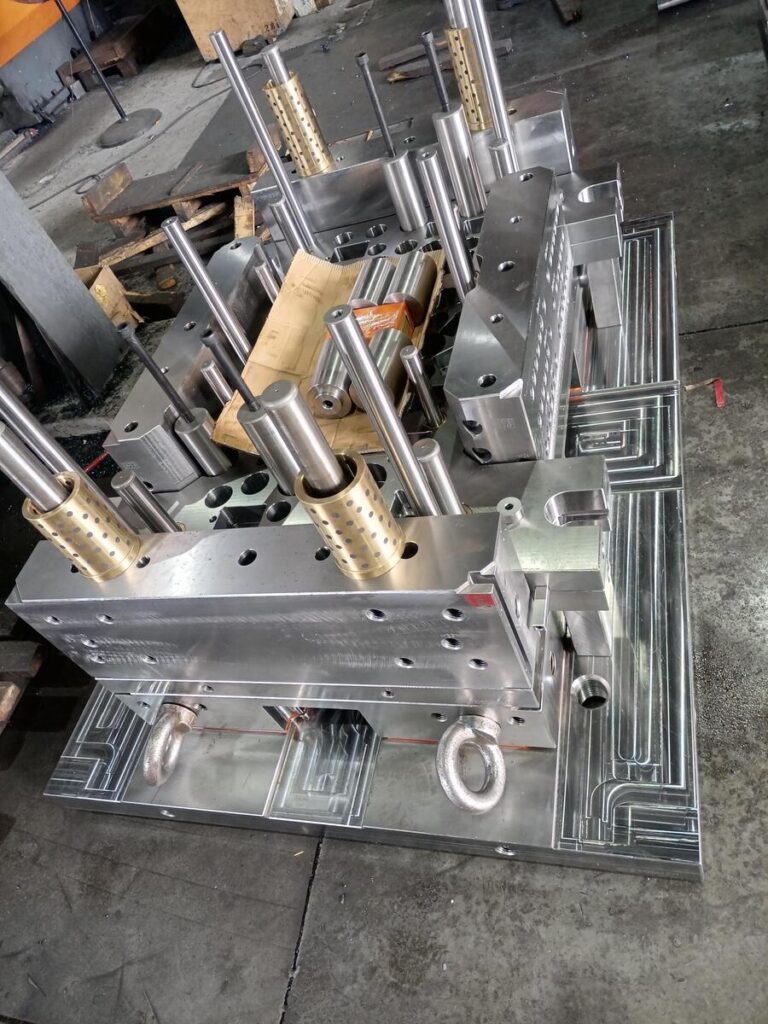
This process is used for rapid prototyping and low-volume production when production-grade parts are required on a shorter timeline. It relies on aluminum or soft steel molds that support the same materials and molding processes used in standard injection molding. With reduced mold fabrication time, manufacturers can produce functional injection molded parts in days or weeks rather than months.
This approach is well-suited for design validation, functional testing, and early production runs. Since production-intent materials are used, the resulting parts closely match those made in full-scale manufacturing. Rapid injection molding is highly accurate, boasts clear surface detail, and repeatability. So, it is a reliable option before committing to hardened steel tooling.
Tooling speed and cost efficiency are key benefits at this stage of the product development cycle. Mold durability is more limited, with tooling typically supporting only a few thousand cycles. This makes this method better suited for pilot runs, urgent testing, and low to medium production volumes.
Urethane Casting
Also known as vacuum casting, it is a rapid prototyping method used to produce detailed parts and cosmetic models from silicone molds. Liquid polyurethane resin is poured into the mold, often under vacuum conditions, to remove trapped air and achieve smooth, consistent surfaces. This rapid prototyping process is well-suited for low-volume prototypes that require a high level of visual accuracy.
Material flexibility is one of the key strengths of urethane casting. Polyurethane resins can replicate the look and feel of many production plastics, ranging from rigid, ABS-like materials to soft, elastomer-style components. This allows manufacturers to evaluate form, fit, and basic function before committing to hard and costly tooling. Silicone molds, however, have a limited lifespan and typically support only a small number of production cycles.
Performance limits should also be considered when selecting this method. While urethane parts are functional, they do not match the durability of injection-molded components under sustained heat or mechanical stress. As thermoset materials, these resins offer a narrower performance range and reduced long-term resistance compared to true thermoplastics.

Tracy is a sales manager with 18 years of experience in CNC machining, specializing in precision components and client solutions.
[email protected]Best Practice for Rapid Prototyping
Design for shrinkage and warpage specific to material and technology; ignoring material-dependent shrinkage up to 0.5–1.5% leads to dimensional errors in fit-critical prototypes.
Contact Our CNC Machining ExpertSheet Metal Prototyping


This rapid prototyping process uses thin metal sheets to produce physical parts in a short time frame. Manufacturers apply processes such as laser cutting, waterjet cutting, bending, stamping, and welding to create functional prototypes from the same materials intended for final production.
This method is commonly used for brackets, enclosures, housings, chassis, and other structural components where strength and form must closely match the finished part. A key advantage of sheet metal prototyping is the use of production-grade materials, including aluminum, steel, stainless steel, and copper.
These materials allow engineers to evaluate performance and mechanical properties under real operating conditions, including mechanical loads and environmental exposure. Since the same fabrication methods are used in the actual manufacturing process, it also helps uncover design for manufacturability issues early, reducing the risk of rework and delays later in the production process.
Get Started With AT-Machining Rapid Prototyping
Rapid prototyping has become an essential tool across industries, helping both large corporations and small businesses accelerate the product development process, reduce costs, and improve collaboration between teams. By creating physical models early in the design process, you can identify issues, refine functionality, and bring better products to market with confidence.
At AT-Machining, we provide rapid prototyping solutions tailored to your project’s needs, whether you require high-precision models, functional prototypes, or small production runs. Our expertise ensures that every prototype reflects real-world performance and design intent, helping you make informed decisions faster. Take the next step in your product development journey. Contact us today to discuss your project and turn your ideas into high-quality, tangible prototypes.