Skip to content
Understanding CNC Machine Classifications
CNC machines can be categorized by their control systems and axis configurations, with each classification offering distinct capabilities for different manufacturing needs.

Control Systems
Experts divide control systems into open-loop and closed-loop configurations. Open-loop systems transmit commands without verifying execution, making them simpler and more economical but lacking position confirmation. Closed-loop systems incorporate feedback sensors that continuously verify movements, automatically correcting any deviations. Production environments typically require closed-loop control because precision tolerates no compromise.
Axis Configuration
This determines the complexity of shapes a machine can produce. 3-axis CNC machines operate along X, Y, and Z planes, sufficient for many applications but limited in geometric capability. Adding fourth and fifth axes enables workpiece or tool head rotation. This eliminates multiple setups and enables intricate shapes in a single operation. While 5-axis CNC machines demand higher initial investments, they reduce cycle time on complex components. Multi-axis configurations continue advancing, particularly where extreme precision is non-negotiable.
The relationship between workpiece and tool movement further defines CNC machine types. Mills secure the part while rotating cutting tools remove material. CNC lathes invert this relationship, spinning the workpiece against a fixed cutting tool. This fundamental difference determines each machine’s optimal applications. CNC laser cutters, routers, plasma cutters, waterjet systems, and EDM machines each employ distinct movement patterns and material removal methods tailored to specific manufacturing requirements.
Top 10 CNC Machining Types
Modern manufacturing relies on various types of CNC machines, each offering distinct capabilities. Most CNC machines fall into categories based on their cutting method and intended application. Understanding the most popular CNC machines and their specific strengths helps manufacturers select the right CNC technology for their production needs.
1. CNC Milling Machines
Some of the most common types of CNC machines in manufacturing facilities worldwide are the CNC milling machines. They secure workpieces while rotating cutting tools move across multiple axes to remove material with precision. These versatile systems handle everything from simple drilling operations to complex multi-surface machining.
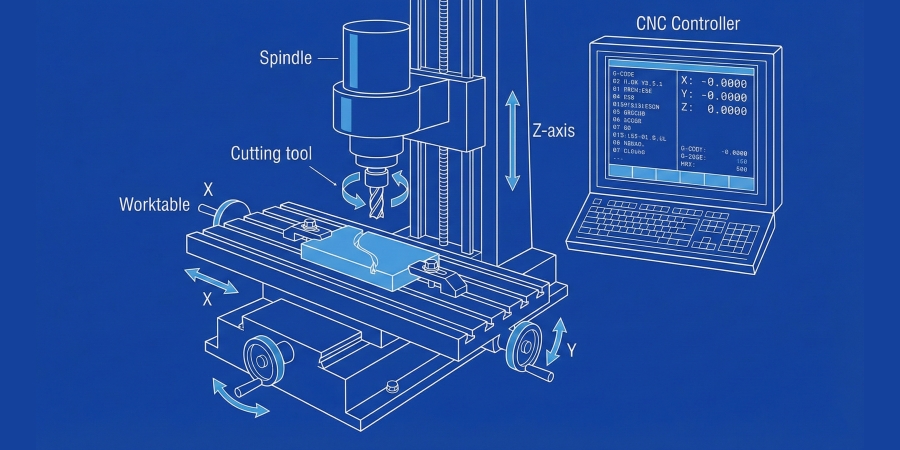
The workpiece clamps to the machine bed while the spindle holds and rotates cutting tools at high speeds. Basic operations use 3-axis mills, but complex geometries demand 4-axis or 5-axis capabilities that eliminate repositioning. Modern CNC milling machines commonly perform milling, drilling, and cutting operations, including face milling, shoulder milling, tapping, drilling, and turning, all within a single setup. Multi-point cutting tools enable simultaneous material removal from multiple surfaces.
Milling applications span aerospace parts requiring tight tolerances, automotive components, medical devices, and electronics housings. These types of CNC machines work with metals like steel, aluminum, and titanium, plus hard plastics, composites, and wood when specifications require.
Material versatility makes them indispensable across industries, including aerospace, automotive, electronics, and medical device manufacturing. Operating expenses on CNC mills run approximately $40 per hour for 3-axis machines. Higher-axis configurations can reach $200 per hour due to increased complexity and capabilities.
Advantages:
- Produces complex shapes with tight tolerances
- Executes multiple operations without workpiece repositioning
- Compatible with diverse materials from soft plastics to hardened metals
- Delivers consistent repeatability for production runs
Limitations:
- Large machines demand significant floor space
- Complex part programming requires skilled personnel and development time
2. CNC Lathes
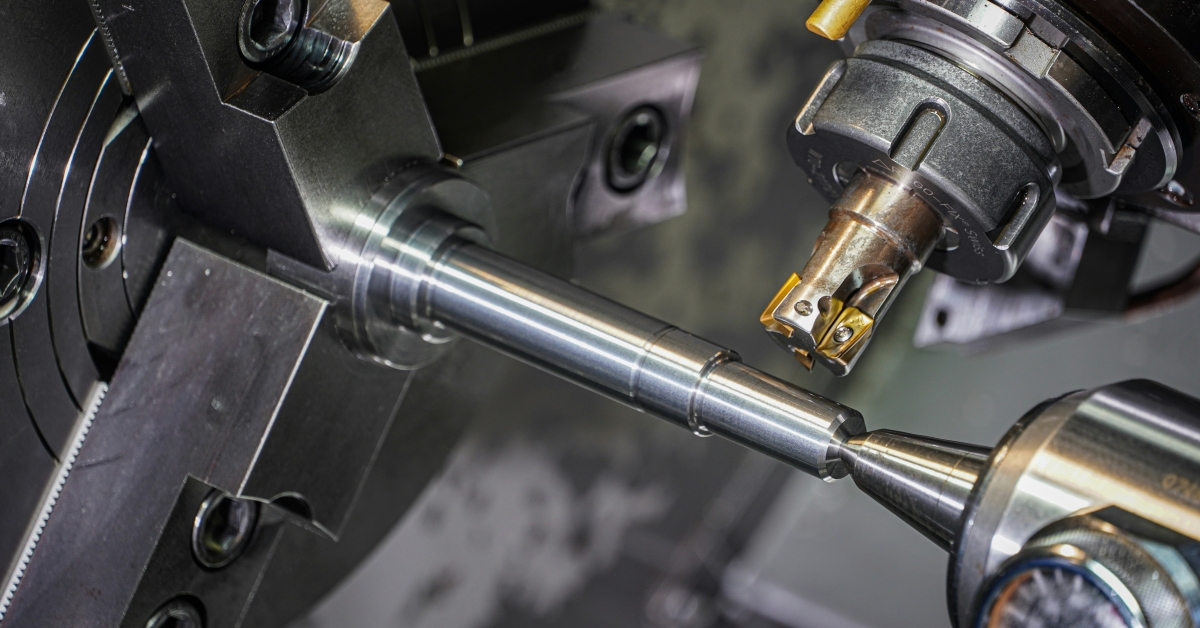
These types of CNC machines specialize in cutting symmetrical objects by revolving the workpiece material around a central axis while a stationary cutting tool shapes it. This CNC turning process excels at cylindrical and rotational components, where mills would prove inefficient.

Material mounts in a chuck or between centers on CNC lathes, rotating at programmed speeds while the cutting tool advances to remove material. The tool follows precise paths to create external or internal surfaces, threads, tapers, and complex profiles. Advanced CNC lathe machines incorporate live tooling that enables milling operations, creating complete parts in one setup.
Applications of these include shafts, bushings, fittings, fasteners, and any component featuring rotational symmetry. Industries from automotive to medical devices depend on CNC lathe machines for engine components, transmission parts, hydraulic fittings, and surgical implants. The rotating workpiece principle makes these machines ideal for high-volume production of cylindrical parts.
Advantages:
- Superior efficiency for cylindrical and symmetrical parts
- Excellent surface finish on turned surfaces
- Live tooling enables complete machining in a single setup
- Faster cycle times than milling for rotational geometries
Limitations:
- CNC lathe machines are limited to parts with rotational symmetry or features
- Larger diameter work requires proportionally larger, more expensive machines
- Manual lathes remain available, but CNC versions dominate production environments, where adherence to tolerance standards such as ISO 2768 is critical
3. CNC Plasma Cutters
These CNC machines use a plasma torch to cut through electrically conductive materials with high precision. These systems generate an electrical discharge arc that ionizes gas, creating plasma that reaches approximately 30,000°F to melt and blow away material.

The plasma torch moves above the material, typically sheet metal, following programmed cutting paths. CNC plasma cutting machines help manufacturers deliver highly accurate cuts with an electrical discharge arc that ionizes the air and melts the material where the torch strikes. Compressed air or inert gas blows molten material away, leaving clean edges suitable for most applications.
Metal fabrication facilities depend heavily on CNC plasma cutting machines for cutting steel plate in structural applications, slicing sheet metal for HVAC systems, preparing components for welding, and creating brackets and mounts. Automotive repair shops employ them for custom fabrication. Any application requiring rapid cutting of conductive metals benefits from CNC plasma cutters.
Advantages:
- Rapid cutting speeds on metallic materials
- Lower operating costs compared to laser cutting
- Processes thick materials effectively
- Straightforward operation and programming
Limitations:
- Restricted to electrically conductive materials
- Edge quality inferior to laser cutting
- Heat generation can warp thin materials
4. CNC Laser Cutting Machines
CNC laser cutters use a powerful beam of highly focused light to cut through many materials, including metals, plastics, and wood, achieving high accuracy and better surface finishes than most alternative methods. The concentrated laser beam delivers intense energy to a microscopic point, melting or vaporizing material with minimal heat-affected zones.

A CNC laser cutter generates the beam in a resonator, then uses mirrors and lenses to focus it to extremely small diameters. The focused laser beam strikes the material with sufficient energy to burn through it cleanly. Assist gas (oxygen, nitrogen, or compressed air) blows away molten material and prevents oxidation, producing superior edge quality.
These manufacturing processes excel at intricate work, including small electronic components with complex patterns, signage, decorative panels, jewelry, medical instruments, and precision gaskets. The non-contact process eliminates mechanical stress, making it ideal for delicate materials. Industries value laser cutters for their ability to cut intricate shapes that other methods cannot achieve.
Advantages:
- Extreme precision with exceptionally clean edges
- Superior surface finish requiring minimal post-processing
- Zero tool wear due to non-contact operation
- Capable of cutting highly intricate shapes and fine details
- Rapid processing of thin materials
Limitations:
- Cutting speed decreases significantly with material thickness
- Reflective materials like copper create challenges for certain laser types
- Requires proper ventilation systems for fume management
- Laser tube replacement represents an ongoing operational expense
5. CNC Routers
These CNC machines are designed for cutting, carving, and engraving softer materials like wood, plastics, and aluminum. While resembling milling machines superficially, CNC routers sacrifice heavy construction for speed and enlarged work envelopes optimized for materials that don’t require extreme rigidity.
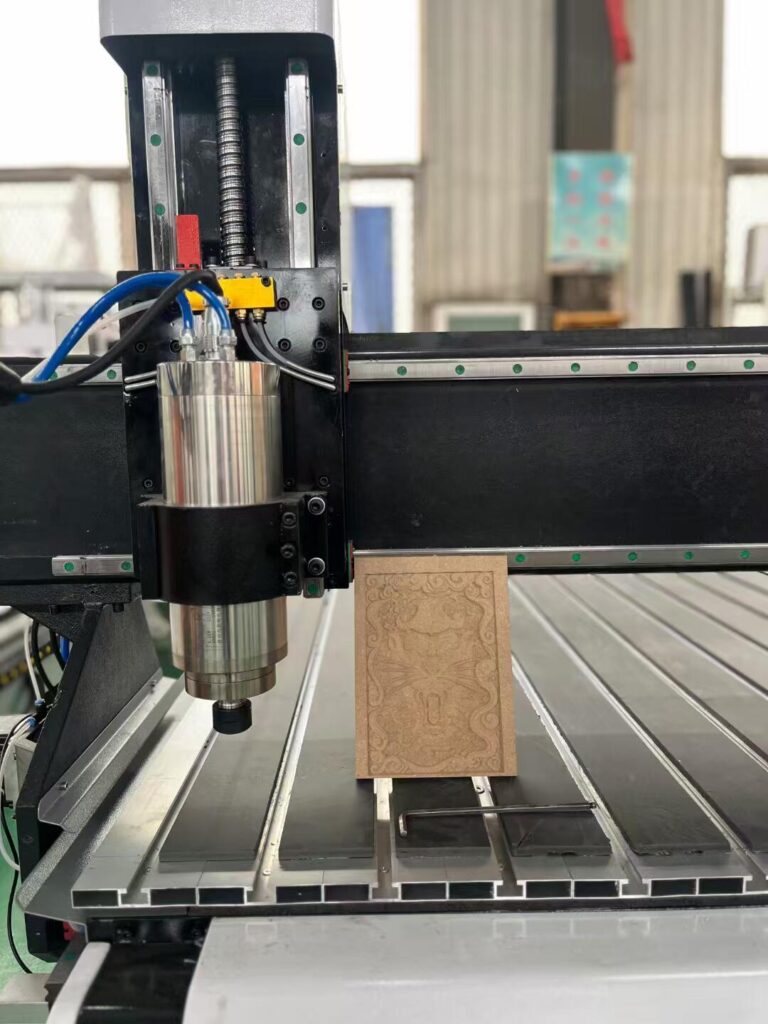

A high-speed spindle or router motor spins bits at 10,000 to 30,000 RPM, significantly faster than typical milling spindles. The bit traverses material in three dimensions following programmed toolpaths. High rotational speeds combined with relatively light cuts enable rapid material removal from softer materials, where CNC mills would be unnecessarily robust.
Woodworking operations employ CNC routers for cabinetry, furniture, decorative panels, and dimensional signage. Prototype facilities use them for foam and plastic models. Some machines handle aluminum for electronic enclosures and housings. Sign manufacturers depend on them for carved letters and engraved panels. Notably, CNC routers reduce waste through efficient nesting algorithms that optimize material usage.
Advantages:
- Large cutting areas compared to equivalent milling machines
- Rapid material removal on appropriate materials
- Lower initial investment than comparably-sized mills
- Minimize material waste through optimized part nesting
- Simplified programming and operation
Limitations:
- CNC routers are unsuitable for hard materials or heavy cutting forces
- Reduced rigidity compared to milling machines
- Lower precision, though adequate for most applications
- Pricing varies considerably based on size and features
6. CNC Drilling Machines
CNC drilling machines are used to drill holes in various materials for screws, secondary assembly, or aesthetic requirements, utilizing rotating drill bits with precision positioning. Accurate hole placement proves critical in assembly operations, mounting applications, and aesthetic detailing where manual drilling cannot achieve the required consistency.
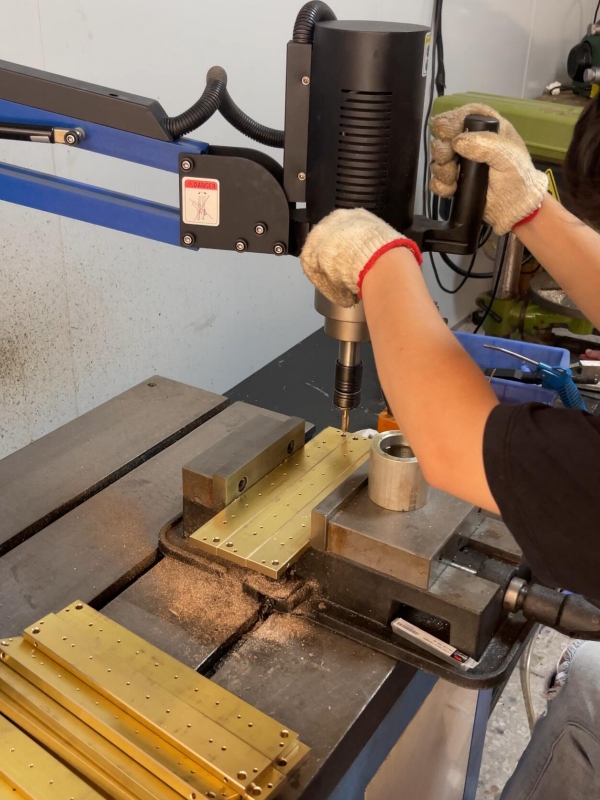
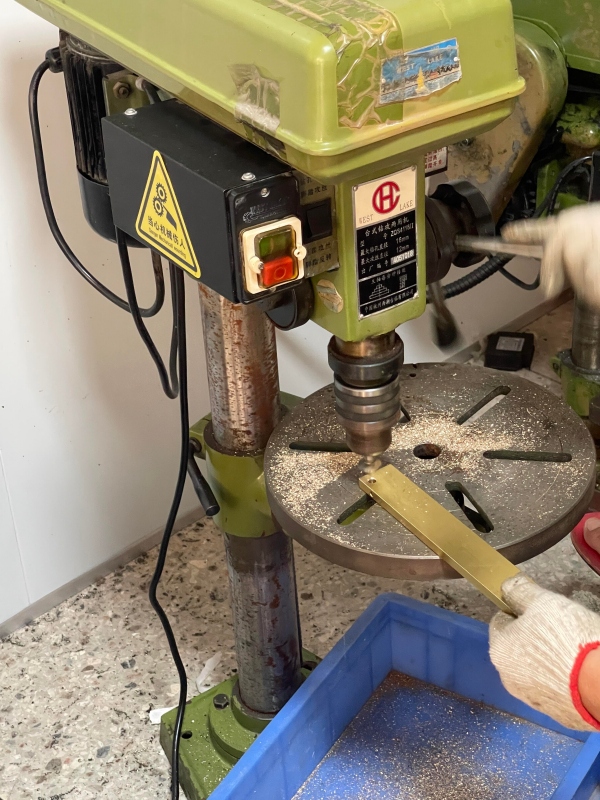
Rotating drill bits spin and plunge into material at programmed coordinates. The machine positions the drill over each hole location with extreme accuracy, then feeds it to the specified depth. Some systems employ peck drills that retract periodically to clear chips and prevent binding when machining blind holes in deep hole drilling. The CNC system ensures every hole achieves the correct location, diameter, and depth regardless of quantity.
Manufacturing applications of CNC drilling machines span printed circuit boards requiring hundreds of precise holes and metal panels needing mounting holes. Manufacturers also choose them for automotive parts with bolt holes, medical devices requiring assembly holes, and furniture or cabinetry with hardware mounting points. Material compatibility includes metals, plastics, wood, composites, and circuit board substrates.
Advantages:
- Extremely precise hole positioning and spacing
- Consistent depth control across all holes
- Rapid drilling for high-volume operations
- Excellent repeatability for production requirements
Limitations:
- Functionality is limited primarily to drilling operations
- Deep holes in hard materials reduce speed significantly
- Different hole sizes require appropriate drill bits
7. CNC Grinding Machines
CNC grinding machines employ an abrasive wheel to achieve high-precision finishing and tight tolerances unattainable through conventional cutting. When parts demand exceptional surface finish or dimensional accuracy, precision grinding delivers results that other machining processes cannot match.

An abrasive wheel spins at high velocity, removing microscopic amounts of material with each pass. The wheel contains bonded abrasive particles that cut tiny chips as they contact the workpiece. This process generates considerable heat, requiring continuous coolant flow to prevent thermal damage. Multiple light passes progressively bring parts to final dimensions with tolerances measured in ten-thousandths of an inch.
Tool and die manufacturing depends heavily on grinding for precision tooling. Bearing surfaces require the finish and accuracy this CNC process provides. Hydraulic components with critical sealing surfaces benefit from grinding’s capabilities. Precision measuring instruments and gauge blocks exemplify grinding’s ability to hold extremely tight tolerances.
Advantages:
- Achieves extremely tight tolerances to 0.0001 inches
- Produces exceptional surface finish
- Processes hardened materials effectively
- Maintains precise dimensions on heat-treated parts
Limitations:
- Slow material removal rate compared to CNC turning or milling
- Grinding wheels require periodic dressing and replacement
- Heat generation demands careful coolant management
8. CNC EDM (Electrical Discharge Machining)
Electrical Discharge Machining uses electrical sparks to erode conductive materials into intricate shapes without direct contact, ideal for hardened tool steel and complex geometries impossible with conventional cutting. This EDM machining process removes material through controlled electrical discharges rather than mechanical force.


The workpiece and electrode are submerged in dielectric fluid while voltage builds between them until an electrical discharge arc bridges the gap. This discharge creates intense localized heat, melting and vaporizing minute amounts of material. The dielectric fluid flushes debris and prevents unwanted arcing. Thousands of precisely controlled discharges per second gradually cut through material regardless of hardness.
Applications include injection mold cavities with complex contours, cutting hardened tool steel after heat treatment, creating small holes or slots in difficult materials, aerospace components with internal passages, and medical device parts. The process machines electrically conductive materials regardless of hardness since no cutting forces exist.
Advantages:
- Machines fully hardened materials without difficulty
- Creates complex shapes impossible with conventional machine tools
- Zero cutting forces prevent workpiece distortion
- Achieves excellent surface finish with proper parameters
Limitations:
- Significantly slower than conventional machining methods
- Restricted to electrically conductive materials
- Electrode wear in sinker EDM operations
- Higher operating costs than conventional processes
- Requires specialized programming expertise
9. CNC Waterjet Cutters
CNC waterjet cutters employ a high-pressure jet of water mixed with abrasive particles to cut through materials without generating heat. This cold-cutting process prevents thermal distortion, work hardening, and material property changes that heat-based cutting methods induce.

Ultra-high-pressure pumps force water to 60,000 PSI or higher. For most materials, abrasive particles (typically garnet) mix into the stream immediately before exiting the cutting nozzle. This abrasive waterjet erodes through material mechanically. Pure water without abrasive substances suffices for softer materials like foam, rubber, or food products. The absence of heat makes the waterjet ideal for heat-sensitive materials and applications where thermal effects are unacceptable.
Applications encompass heat-sensitive materials, stone and tile for architectural work, aerospace composites, thick metal plate, glass, rubber gaskets, and even food processing. The CNC waterjet excels where thermal effects must be eliminated. Material versatility spans metals, stone, glass, ceramics, composites, plastics, rubber, foam, and wood up to several inches thick.
Advantages:
- No heat-affected zone or thermal distortion
- Cuts virtually any material regardless of hardness
- No tool dulling or breakage concerns
- Processes very thick materials effectively
- Minimal dust or fume generation
Limitations:
- Abrasive consumption adds a significant operational expense
- Slower than plasma or laser on thin metals
- Edge taper increases with material thickness
- Loud operation requires hearing protection
10. CNC Swiss Machines
These CNC machines, also called Swiss screw machines, specialize in manufacturing small, precise parts with complex features. Originally developed by Swiss watchmakers, CNC Swiss machines excel at producing long, thin components that would deflect or chatter in conventional lathes due to inadequate support.
In CNC Swiss machining, the material bar stock is fed through a guide bushing that supports it immediately adjacent to the cutting zone. This support prevents deflection even on slender, high-length-to-diameter-ratio parts. The material rotates while multiple machine tools work on it simultaneously.
As operations progress, the bar advances through the bushing, exposing fresh material. Advanced Swiss machines incorporate Y-axis capability and live tooling for milling operations, creating complete complex parts in one cycle.
Applications include medical device components like bone screws and surgical instruments, aerospace fasteners, watch components, connector pins and terminals, and automotive fuel injector parts. Any application requiring small, precise parts with multiple features benefits from Swiss technology.
Advantages:
- Superior performance on small-diameter, long parts
- Exceptional precision on complex geometries
- Multiple simultaneous operations in a single setup
- Ideal for high-volume production requirements
Limitations:
- Limited to relatively small part sizes
- Requires bar stock feed material
- More complex programming than standard lathes
- Higher initial investment than conventional turning machines
Choosing the Right CNC Machine for Your Project
Selecting the right CNC equipment depends on understanding your specific manufacturing needs. Consider these key factors when evaluating different types of CNC machines for your operations.
Understanding Your Part Requirements
Choosing appropriate types of CNC machines requires careful analysis of actual manufacturing requirements rather than pursuing impressive specifications. Part geometry provides the starting point. Cylindrical components favor lathes, while parts with pockets and complex contours require milling capabilities. Three-dimensional sculptured surfaces may demand multi-axis machining.
Material and Machine Compatibility
Material selection significantly influences choice of CNC machines. Steel plate cutting suits plasma or waterjet systems. Intricate patterns in thin metal favor laser cutting. Hardened tool steel often requires EDM or grinding. Wood and plastics process efficiently on routers. Matching machine capabilities to actual materials prevents costly mismatches.
Production Volume Considerations
Production volume considerations prove equally important. Prototype development demands flexibility, while high-volume manufacturing justifies investment in faster, more specialized CNC equipment. 5-axis CNC mills command premium pricing but eliminate multiple setups on complex parts. This potentially offers lower per-part costs.
Practical Setup Requirements
Practical considerations, including floor space, power requirements, and operator skill levels, merit attention. The size of the CNC machine should be larger than the maximum area of the products you plan to create, with adequate clearance for loading and maintenance. The power requirements of the CNC machine should be checked to ensure compatibility with your workshop’s electrical system. The feed rate is a critical consideration when choosing CNC machining services, as it determines the rate at which materials can be cut, directly impacting productivity.
Conclusion
Modern manufacturing relies on different types of CNC machines because each excels at specific operations. CNC mills dominate complex three-dimensional work. Lathes efficiently produce cylindrical components. CNC plasma cutters rapidly slice thick metal. Lasers deliver precision on delicate parts. Understanding each machine’s capabilities enables informed decisions about production approaches and equipment investments.
Manufacturing processes continue evolving with advances in multi-axis systems, smarter controls, and improved tool movement precision. However, fundamental principles remain constant: match parts to appropriate machining processes, consider materials and volumes carefully, and balance capabilities against budget realities.
Consultation with experienced manufacturers regarding specific part requirements often provides valuable guidance. AT Machining handles diverse CNC machining operations and can help match requirements to optimal processes. Our team will work with you to identify the most cost-effective manufacturing approach for specific requirements, from initial prototypes through full production runs. Contact AT Machining today to discuss your project and receive a detailed quote.